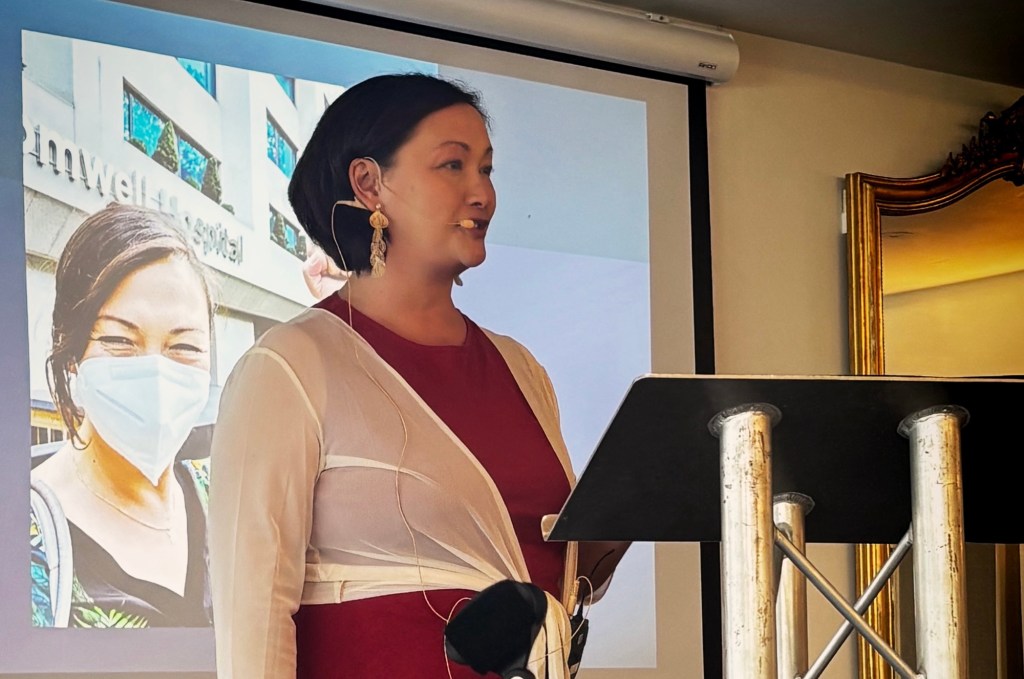
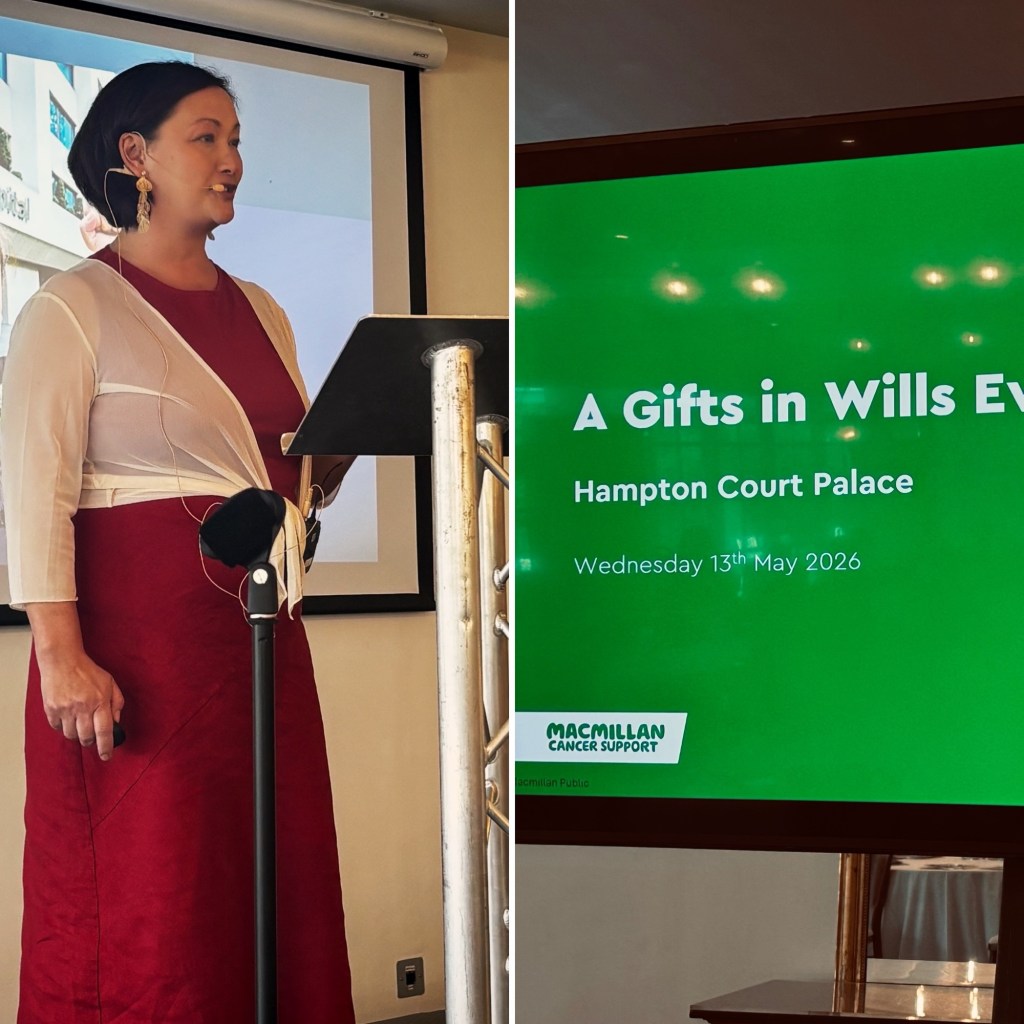
This week I was invited to speak at Macmillan’s ‘Gifts in Wills’ event at Hampton Court Palace. Below is the text of my speech in full. It’s a recap of the weirdest and most challenging year in my life. I’m rebuilding. Back to work a couple of half days a week and loving being around my colleagues again and the leafy campus at Royal Holloway, thinking about interesting things. Finding new directions and appreciating why I work at all.
I’m discovering the difference between treatment and healing. It’s slow and taking time, physically and psychologically, to figure out what the hell just happened and process the impacts on my mental health. I can’t say I have come out the other side completely unscathed. My treatment continues forever and it irks me that I never get to ring that chemo bell on the ward but I feel pretty well on the drugs now we have the levels right, apart from a bit of persistent joint pain that makes me walk like a Chinese grandma and makes me slightly cranky. But hey. A painful knee and being a little bit wobbly in the head seems a small price to pay and I would have taken that like a shot if you’d asked me a year ago. I’m having elective surgery soon to remove my ovaries to rule out any risk of oestrogen as that is the primary fuel for my cancer. Then we move on. Onwards and upwards. And other Very British Sentiments.
I’ve been telling my story in writing for a year with no holds barred so I thought ‘No problem!’ when Macmillan asked me to speak. But standing up in person in front of a room full of sympathetic eyes and telling a very personal story out loud for 20 minutes was something quite different. My voice broke and had a little sob two or three times during the speech (every time I mentioned my children I think) which was worse than I expected but I managed to recover myself quickly by invoking former Prime Minister Margaret Thatcher’s trick of deepening your voice. It made me chuckle to think of her as I stood on stage trying to control my snotty nose. She never had that problem as far as I know.
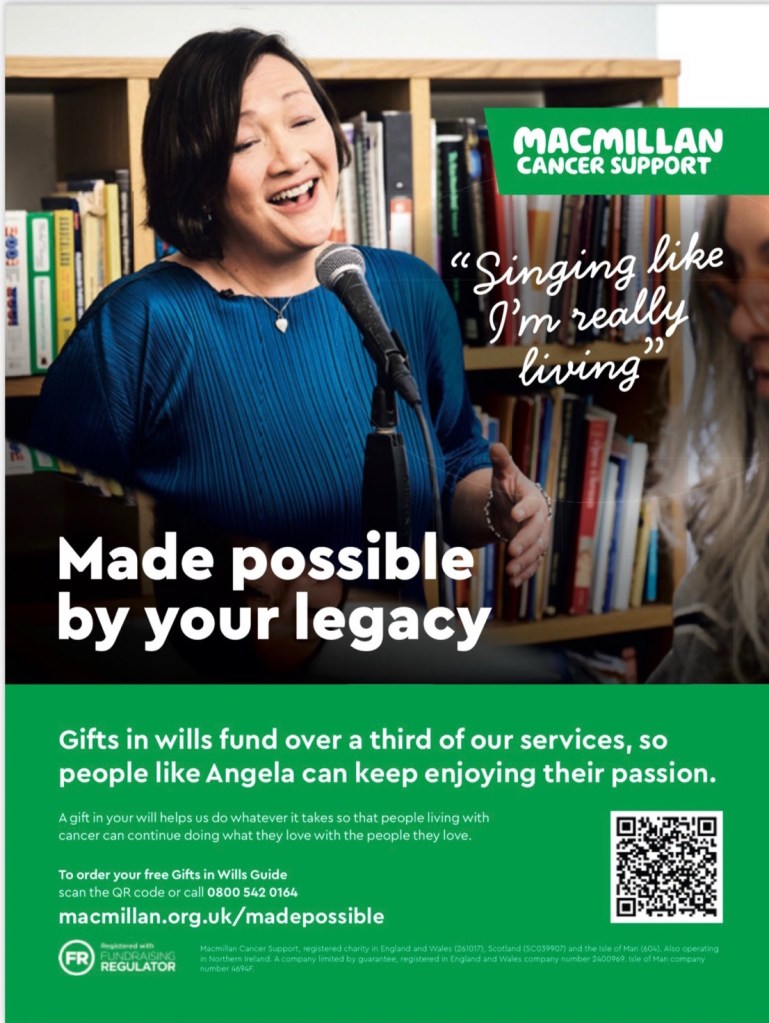
Macmillan had gamely suggested it would be fun if I sang ‘Feelin’ Good’ since their BBC Music Magazine campaign featuring me has been about recovering through music. It was a bit lonely to sing all by myself to a backing track on that stage after the luxury of having a jazz band around me the last few times I’ve sung but the audience were very encouraging and kindly clapped along through the musical break on request. It was lovely to get a standing ovation and have people come up afterwards. I struggle a bit with taking compliments and am learning to do it graciously without feeling the need to do that British/female thing where you caveat the compliment by putting yourself down. My friend Sharron taught me how years ago. You just smile and say ‘thank you, that’s very kind’.
I genuinely love Macmillan. I think it is a brilliant, brilliant organisation with deeply held values and passionate, dedicated staff. I’ve never done any serious fundraising or advocacy for a charity (well except for a couple of mad moments as a teenage environmentalist speaking in Trafalgar Square for Greenpeace). The services they offer to people with cancer by way of support, navigation, and the clinical nurse specialists they train, make a tangible difference to your experience of living through cancer when you are floundering around trying to make sense of it all.
The thrust of the day’s event was to encourage people to leave a gift in their will to the charity, of course. Macmillan offer a free will writing service. This is a simple thing to do but best done with legal guidance and astonishingly half to two thirds of people in the UK don’t have one. You don’t have to have cancer to use the service but they will of course ask if you want to leave a gift. Fact of the day that I still can’t get my head round is that a generous tax break on gifts to charities left in wills means that you can leave 10% of your estate and it results in your loved ones receiving THE SAME TOTAL AMOUNT as if you’d left 4% of your estate. This amazing fact was based on an illustration of people who fall into the 40% inheritance tax bracket (for those outside the UK this is not uncommon with a single property plus cash). I’d never considered it but it seems worth it so the government don’t just soak it all up.
Anyway, here is the text of the speech in full if you’re interested. Just writing it, and then speaking it to a crowd of strangers has brought up a lot but also allowed me to feel like I am moving past it. The stories we tell matter.
***
Hello, my name is Angela Chan, and I was diagnosed a year ago with stage four cancer.
I’m 52. I’m a mother of three teenagers.
A professor of creative industries, a former filmmaker and television executive, and nowadays, with more time on my hands, a painter, and a singer. The one thing they all have in common is storytelling. Cancer has changed the story I expected to tell about my life. I hope in some small way the story I tell today might speak to you, but I recognise that my experience may be different to your experience of cancer.
So, thank you for the opportunity of allowing me to tell it for the first time, in person.
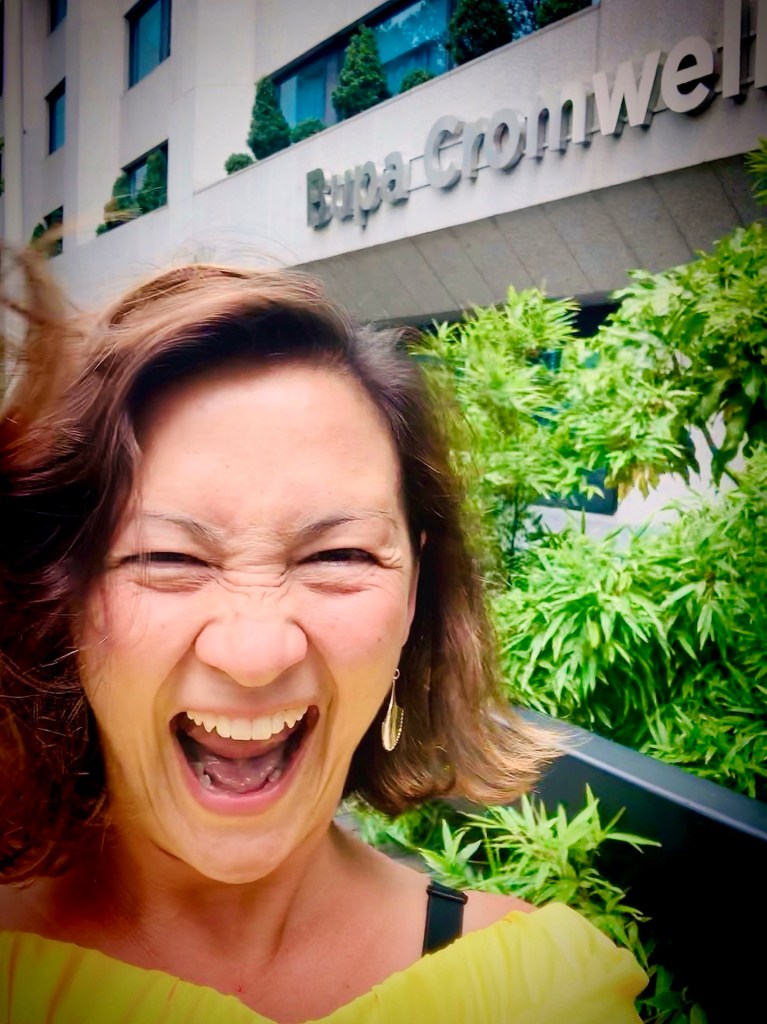
This was me in 2018, at the end of treatment for my first cancer. Round 1. A small breast cancer 2.4cm whipped out, followed by 5 weeks of radiotherapy, an unexpected bout of cellulitis, suspected blood sepsis and lymphoedema.
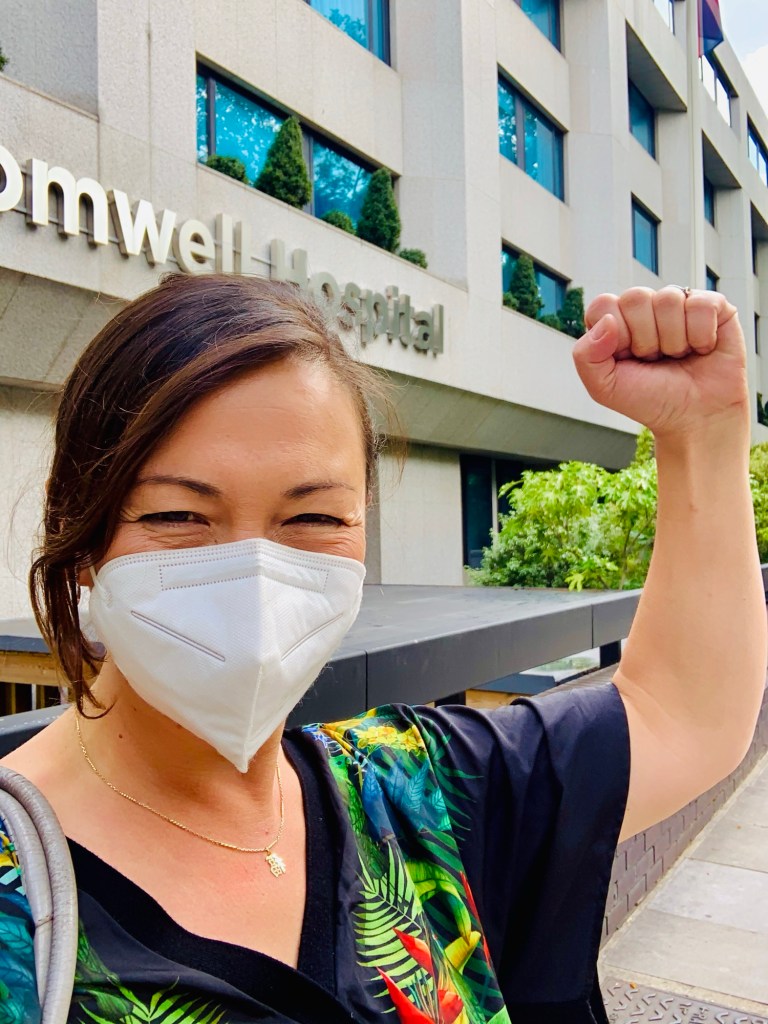
And this was me in 2023, leaving my final annual mammogram—officially allowed to pretend it had never happened.
I was triumphant. I’d been “clear” for 5 years—that magic number. My stage 4 diagnosis came in early 2025…18 months after this photo.
Cancer had already sent my life story off at a tangent. I’d had to give up my fancy job in television because I didn’t want the stress anymore, and I started a PhD and became a professor. Got my life back on track. I put the last full stop on my thesis and submitted it the day before I found out.
Like many, I’ve been living alongside cancer for much longer – since I was 17 – when my mum first learned she had breast cancer. In the late 80s the C-word was still spoken in a hushed voice as it was considered a death sentence.
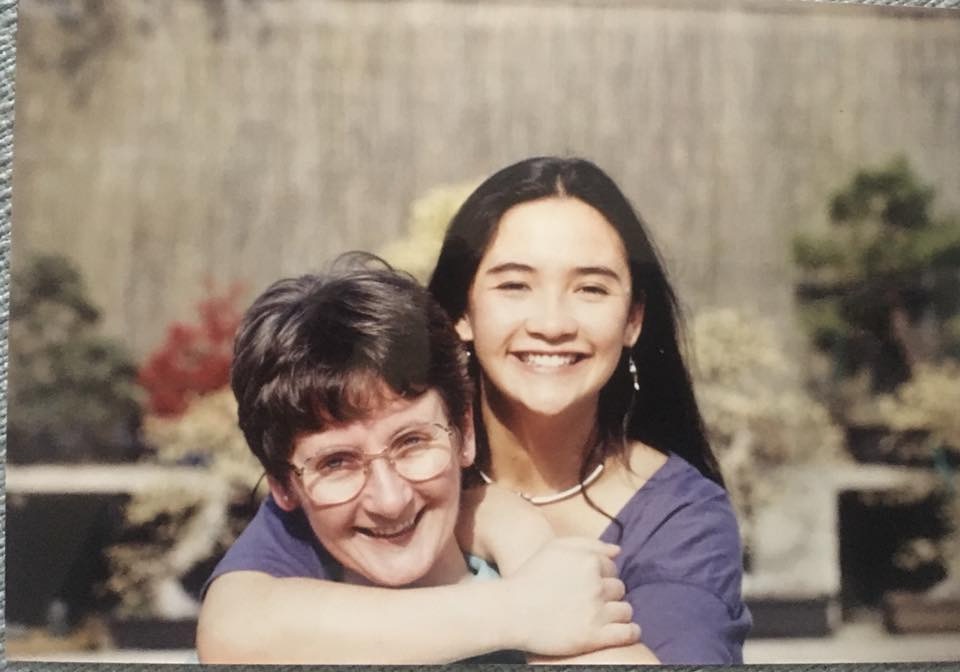
My mum, Dawn, lived with the disease for over 30 years. The invention of new drugs had always stayed a step ahead of her progression. She passed away from her secondaries at 74, exactly a year before my first diagnosis. My first thought was that I was glad she was not around to see this. Optimistically, I thought – maybe I would also get to live long enough to see my children grow up.
For about a year before my secondary diagnosis, I’d felt something wasn’t right.
Fatigue, strange pains, my bloods were off.
I asked my doctors, more than once: “Are you sure it’s not cancer?” I was told: maybe just the menopause – you’re just getting older. They sent me for a few tests but nothing showed up. I was fit, active so I didn’t understand why I couldn’t catch my breath on the stairs. Eventually, a trainee GP at my surgery listened. Like a detective following a trail, he was determined to get to the bottom of my mystery, he sent me for autoimmune and allergy tests, and eventually, when I said I couldn’t breathe – to the rapid access chest clinic. The trail went cold over Christmas as I waited for a CT angiogram in the first week of the new year. To check my heart.

I spent New Year’s Eve in Finland with my husband and our three kids under the Northern Lights. A lifelong dream. I’d always said—once I’d seen the Northern Lights, I could die happy. I spoke too soon.
On January 6th, they found a “small nodule” on my lung. An ‘incidental pickup’
Small word. Big consequences.
I’d gone alone to the results appointment wanting no fuss. After all it was just a nodule and everyone I’d spoken to so far had been playing it down. But the consultant was blunt. He didn’t like the look of it. He said there was a 70/30 chance it was lung cancer. Odds in my favour? I asked hopefully. No. Odds against me. Then, sensing I might be about to have an emotion, he sent me next door to see Mark, the specialist clinical nurse. And that was the moment I knew I was in trouble.
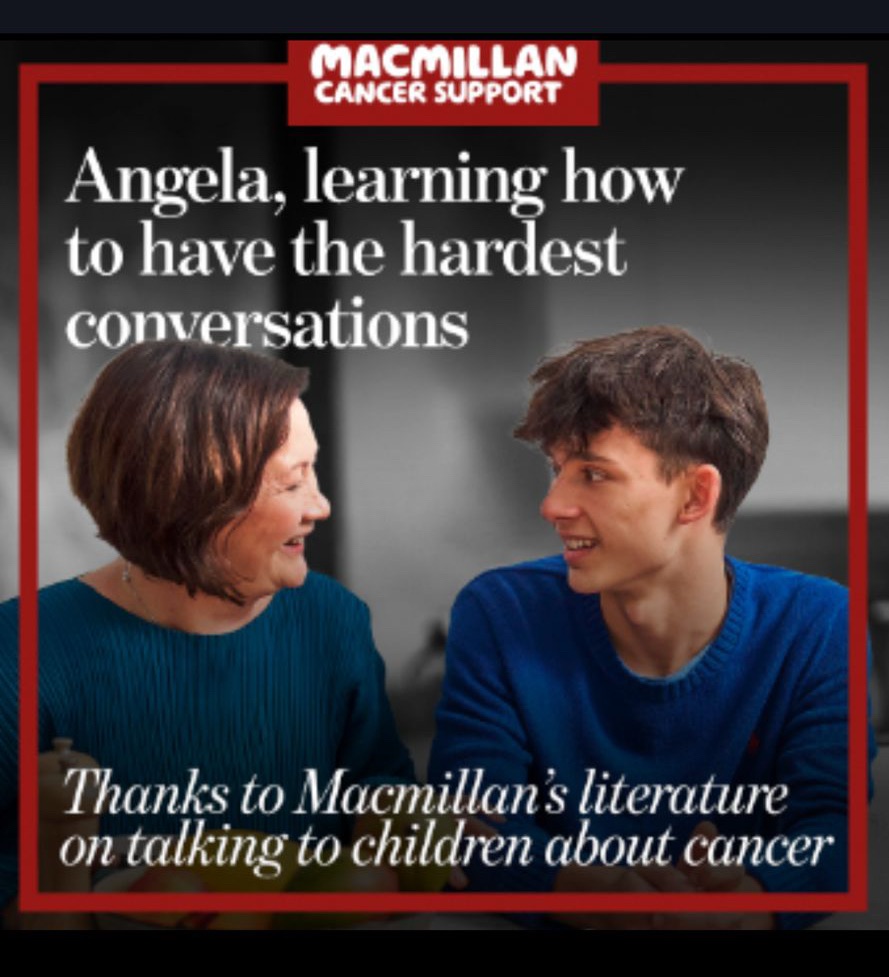
Because in the NHS, when you see a room with a comfy sofa—AND a Macmillan trained nurse ready with the tissues – you know it’s likely to be pretty bad. And as I absorbed the possibility of lung cancer here was this calm nurse, trained to sit quietly through my grief and shock, and ready to reassure me and give me the information I needed about next steps. Mark told me about the Macmillan services that were available to me. Booklets on telling the kids, my rights at work, how to access mental health support. He handed me the tissues
I felt like I was drowning under black waves and it was like he arrived with a lifeboat on that black sea. Throughout the early weeks of my diagnosis, in the period where everything was confusing and terrifying, he threw me lifeline after lifeline. And if he was the lifeboat, Macmillan was the lighthouse.
A few weeks later, after a full-body PET CT scan, came worse news. Not one nodule—but extensive cancer in my lungs, lymph nodes, and bones. At least 5 tumours that they could see. Two in my lungs, one in my spine, one in my hip, one in my shoulder blade. ‘You were expecting bad news, weren’t you?’ said the consultant. ‘Er, not that bad’, I said. But now it hit me with full force. I felt like the ground might open beneath my chair and swallow me whole. I wanted to lie on the floor and howl or scream. But instead, I went through the motions, asking sensible medical questions like a little professor as the burning sensation spread through my body. Cortisol, I thought. ‘A perfectly rational evolutionary reaction to being told there is a very real threat to your life’, said the little professor in my head.
The lung team seemed fairly sure it was lung cancer. But they would need to do a lung biopsy urgently to be sure before starting treatment. When I asked about the prognosis all they’d say was ‘not great’. But new treatments are coming on line all the time! Great. My own late-night googling told me I had a year or two if they were right and if it was lung cancer. Five if I was very lucky and beat all the statistics.
After my shocking diagnosis I was spat back out the other side, and put back in the room with Mark the Macmillan nurse. Calm. Steady. Human. Ready to catch.
While everything else felt like it was falling apart, he was already working out and preparing me for what came next. The biopsy was urgent but there were no endoscopic cameras available. Everyone had been chomping down on them and they were all broken. He said he’d find one from the other end of the country if he had to. He’d call me and let me know when he’d sorted it out. And he did! His honesty and commitment mattered. Because in that moment, I wasn’t thinking clearly and I wasn’t ready to be strong.
‘But I’ve got three kids Mark, I said, what about my kids?’ as if he’d have an answer.
‘Sorry’ he said. ‘Sorry’.
A lot of people said sorry to me in the days that followed. There was not much else to say. I went outside, looked up into a grey Paddington sky, sobbed on the husband for a bit and dragged him to the filthiest pub I could find to drink vodka with tequila chasers. That was, more or less, the last time I drank.
What followed was months of uncertainty.
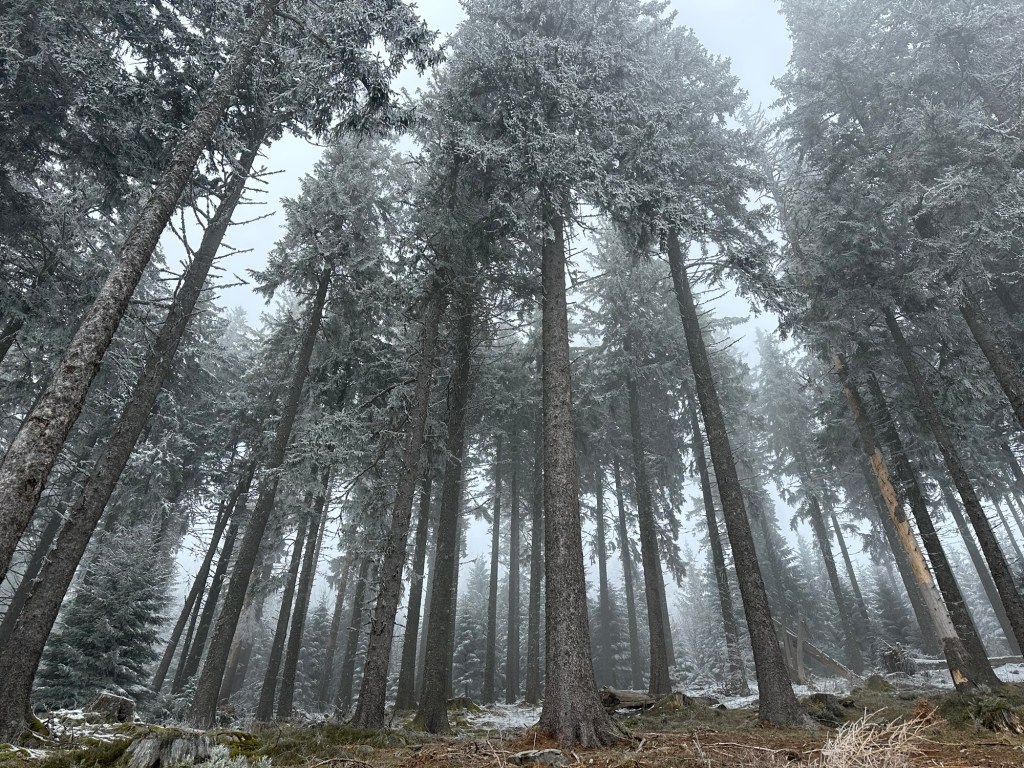
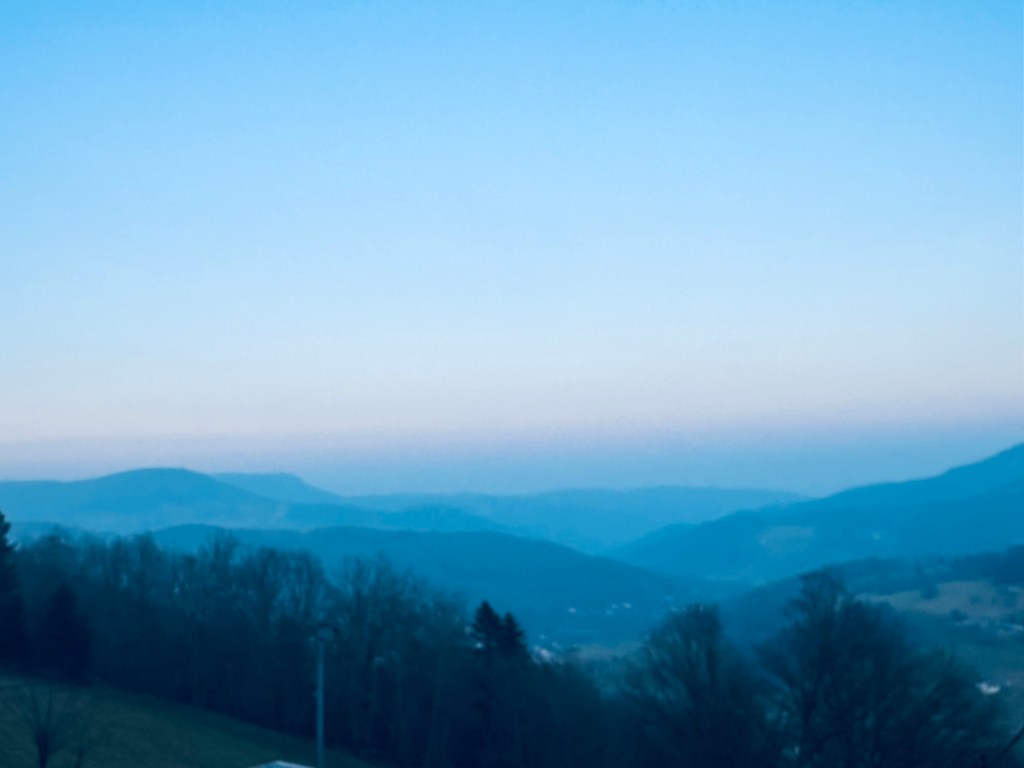
We disappeared to the mountains in the Alsace after the lung biopsy. I found great comfort in the natural world whilst waiting for results. It was a rather bleak spring. I ran back to the hotel to take calls from my consultant but each time my results were delayed. I felt, quite literally, lost in the woods.
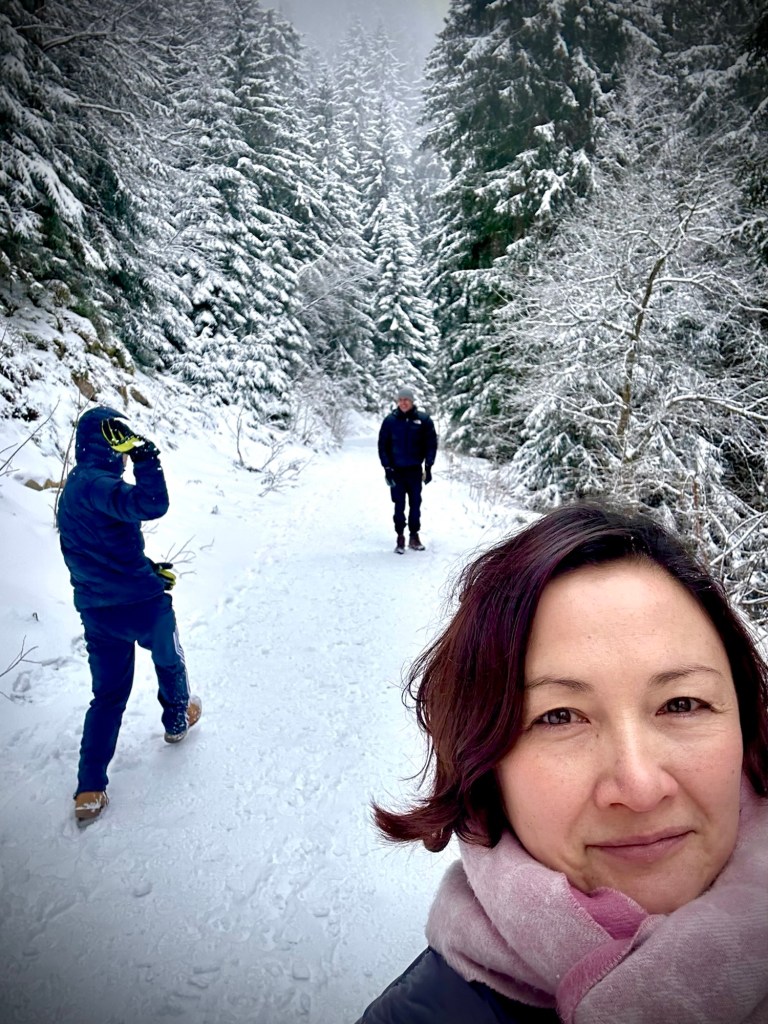
There are many things about a cancer diagnosis that seem unfair. Having worked in the field of equality and diversity for a long time I always find myself noting the systemic inequalities around me. I’d attended friends’ diagnoses who did not speak English well and their experience was very different, as was that of friends in a similar position to me living in other parts of the country.
I knew was luckier than most. I was at a big London research hospital, stuffed with Macmillan nurses, I was well-insured, had a stable home situation. I was used to being my own best advocate. Yet, despite all of my powers of self-advocacy, I could not break through the bureaucratic wall and get my results. Even my consultant confessed he had no idea why the lab was taking so long with my results and encouraged me to put in a formal complaint.
My complaint later revealed that my biopsy results had actually been misplaced – just a bureaucratic error in a creaky manual system. I only found out because I fought. Using my sharp journalist elbows I threatened to talk about it on a BBC podcast I’d been invited to speak on. And I had my results by the afternoon…
Cancer is arbitrary – the systems we have built are unfair. But they are more unfair for some. Macmillan, I realised, acts as the leveller – sometimes having to stick the health system back together with sticky plaster. I became a regular caller to the Macmillan support line, just trying to navigate a system that felt overwhelming and, at times, impossible. Without that support in the first few weeks, I’m not sure I would have coped.
Eventually, four months after my first scan, the correct diagnosis came through.
Not lung cancer—but metastatic breast cancer, spread to my lungs and bones. I whooped for joy as I made the consultant tell me on the train, much to the surprise of a carriage full of people who had never heard someone so happy to learn they had secondary breast cancer. It had a better prognosis than secondary lung cancer. But I would now have to get to the back of the queue again to be seen by the breast team.
The day before chemotherapy started, they found an eighth tumour on my spine.
Finally, by May there was a plan. A way forward. And for the first time, I had something else:A glimmer of hope.
***
Sometimes life throws you off course with such force that it is hard to process. For a few weeks I felt like my legs would hardly hold me up and the words that came out of my mouth seemed hollow. No one else knew what to say either. I avoided the office, the school run and social occasions. Other people’s reactions became like a field of emotional landmines as I picked my way through the day. Some people tried to comfort me with sentiments like ‘well, none of us the know how long we’ve got’ or my favourite ‘any one of us might get hit by a bus’. What is it with the British and buses?
Now, being a prof, I like to be evidence based so I looked up how many people actually die getting hit by a bus every year. Sadly, it is 24 but the number of people who die from cancer is 170000 a year. So, it didn’t really help but I made sure to be extra careful crossing the road.
I used the Macmillan support lines to find a way to talk about it even though I didn’t want to because I did not want to burden my family with the darkness of my thoughts. And I turned to other ways of making sense of what was happening.
As an academic, I read as many relevant scientific papers about my condition as I could and politely declined the miracle cures people sent me on Instagram. I found evidence that patients with a positive attitude had better long-term outcomes and responses to medication. I read studies that showed that making music with others had real health benefits for the autonomic nervous system and improved immunity. Here was something small that I could control perhaps.
I made a decision.
To do more of what brought me joy.
To commit to using creativity as an act of transformation. To rewrite the story.
I started telling people—half joking, half serious—that I was a magical unicorn,
and all my tumours were going to disappear.
I began to create.
Creativity had always played a big role in my life – it had been the foundation stone of my career – but now it felt like more than just a way to thrive but to survive.
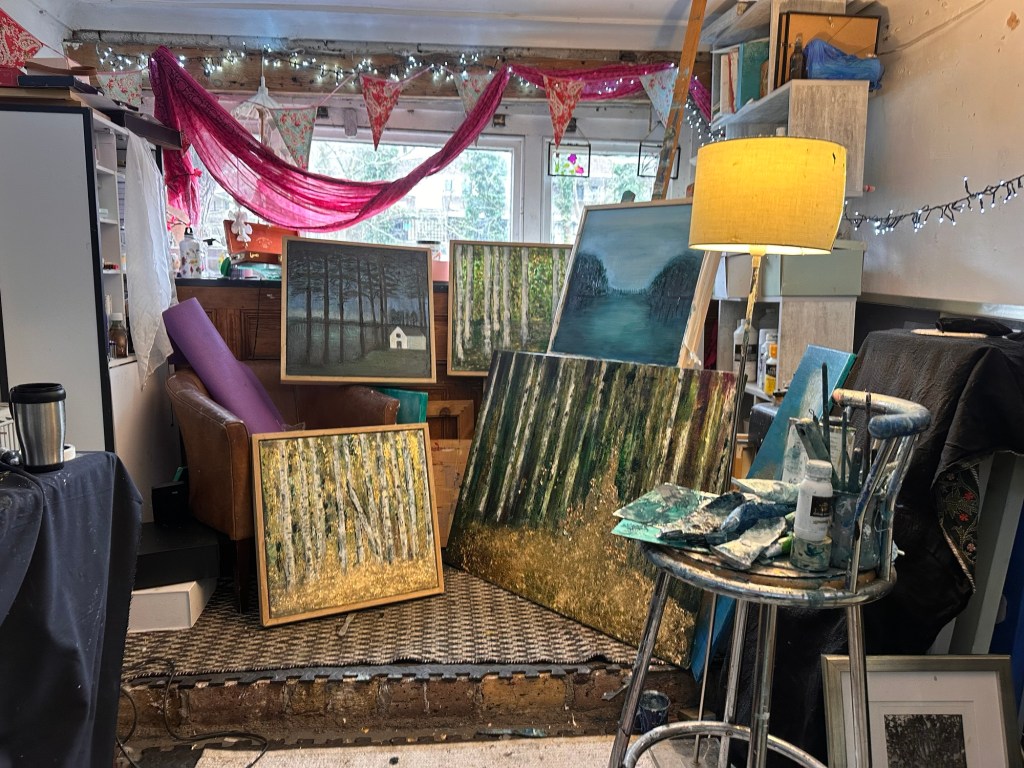
And so…in my studio by the river, I painted. At first, dark forests—with no way out. Slowly, something shifted.
Openings appeared. Light. Pathways. I was painting myself a way through.
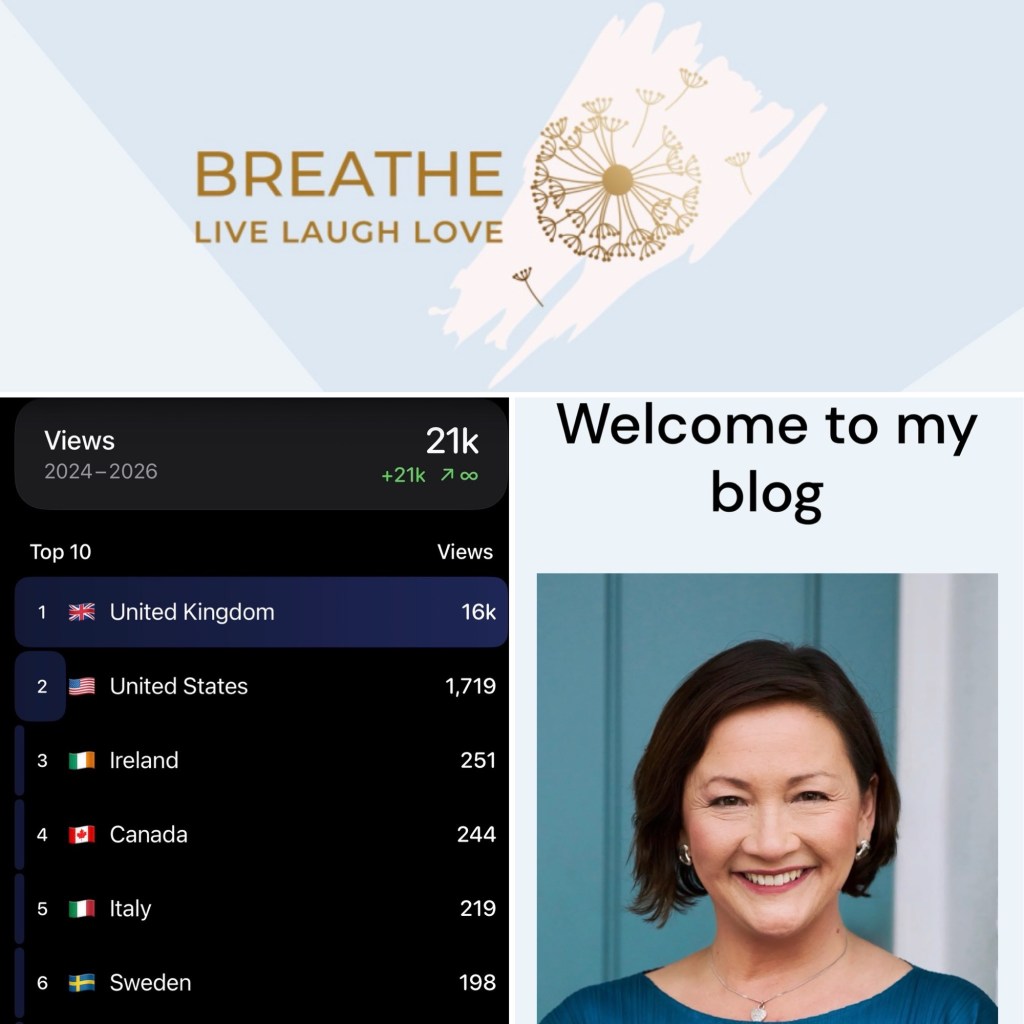
And I wrote – a blog—just to process what I was feeling when I couldn’t find the words to speak about it. The words poured out. Over the coming months it connected me to thousands of people in a profound way as I started to hear back from them.
Friends, colleagues, and strangers. 21000 of them to date in 63 different countries.
And then—I began to sing. I had signed up for a jazz course before my diagnosis. I nearly didn’t go. But my teacher said, just come on the good days. Rest on the bad ones. So, I did. Through biopsies and chemotherapy. And then I decided to do something I’d been putting off for 30 years. I planned a jazz gig. It was one of those things I’d always meant to do. I hadn’t sung with a jazz band since I was in my twenties. I was aware that this might be my last chance. I thought—if I’m going to do this, I might as well do it properly.
I found a band. Planned for friends to step in when my lungs gave out. I worked out I could sing three songs at a time, take a break, and start again.
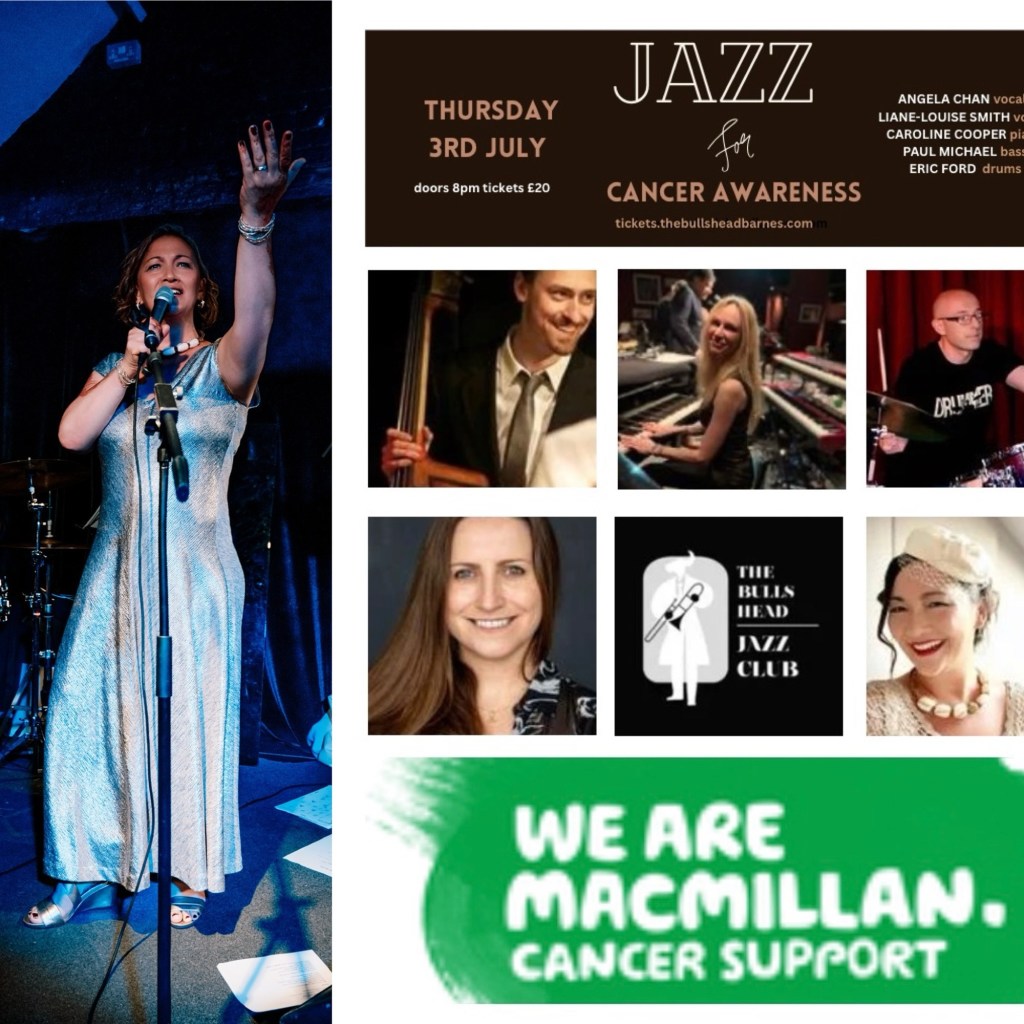
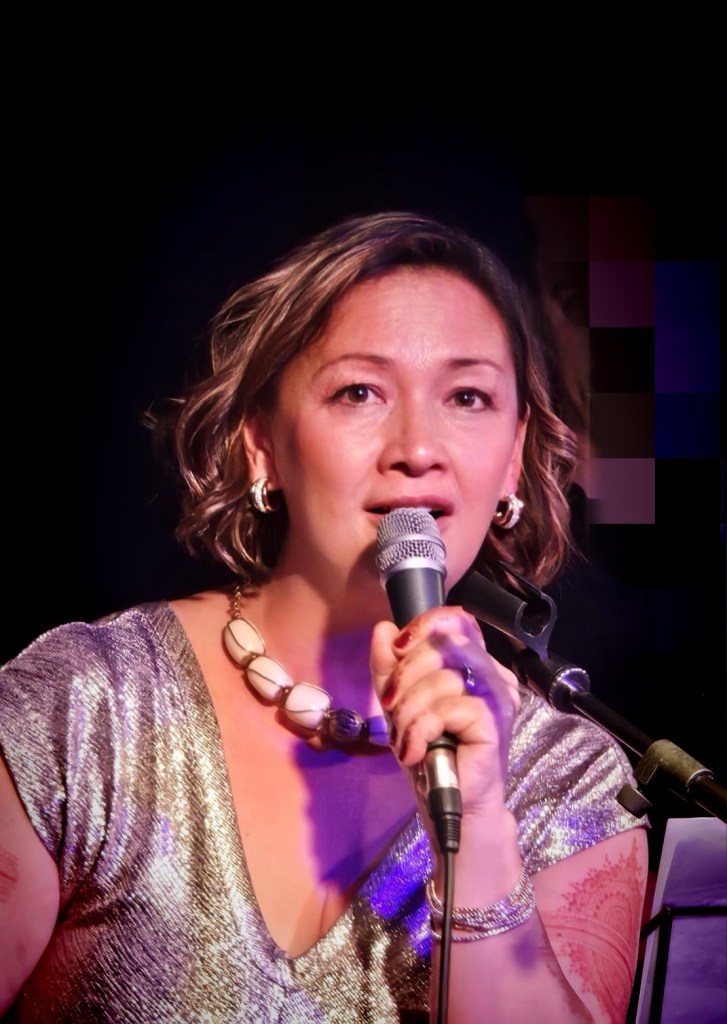
And then one of London’s oldest jazz rooms – the Bulls Head – where my husband and I had had our first date, called back – and they gave me the venue for free as I was fundraising for Macmillan and other cancer charities. We raised £17,000 in one night.
It gave me something back. A sense of control. A sense of joy.
A way to live inside this experience, not just endure it.
And I can tell you—the words to Feelin’ Good have never felt more appropriate. Singing, sounding had such a profound effect on my body and my mental health I began to explore sound for my own healing, and I began to train as a sound healer.
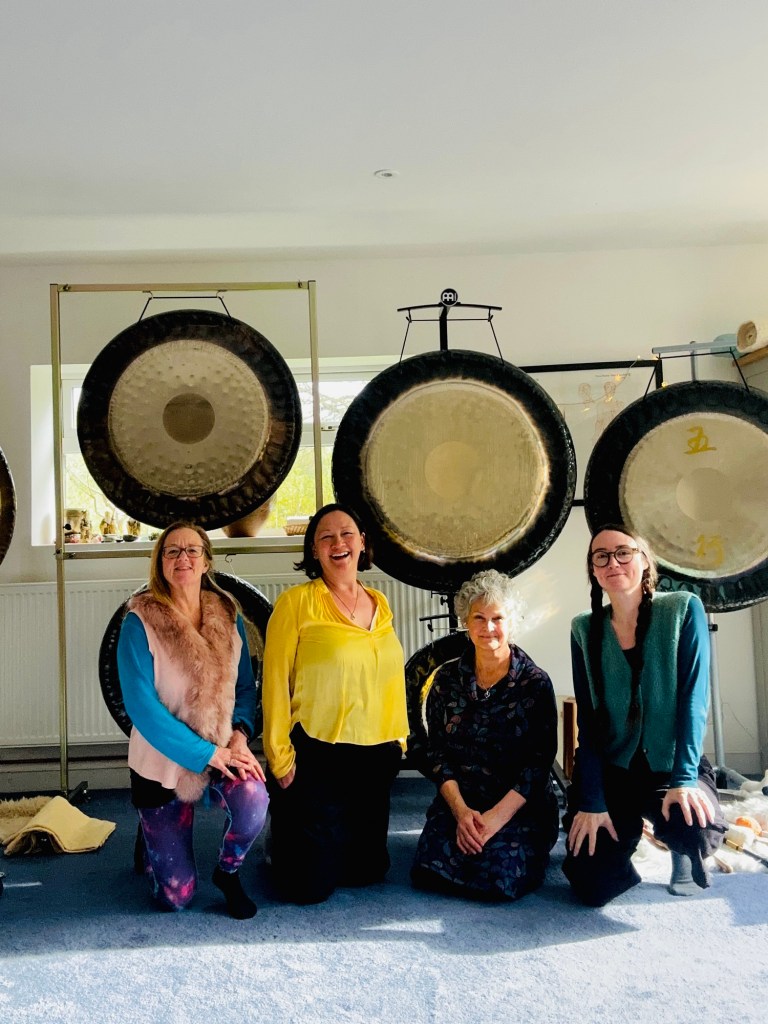
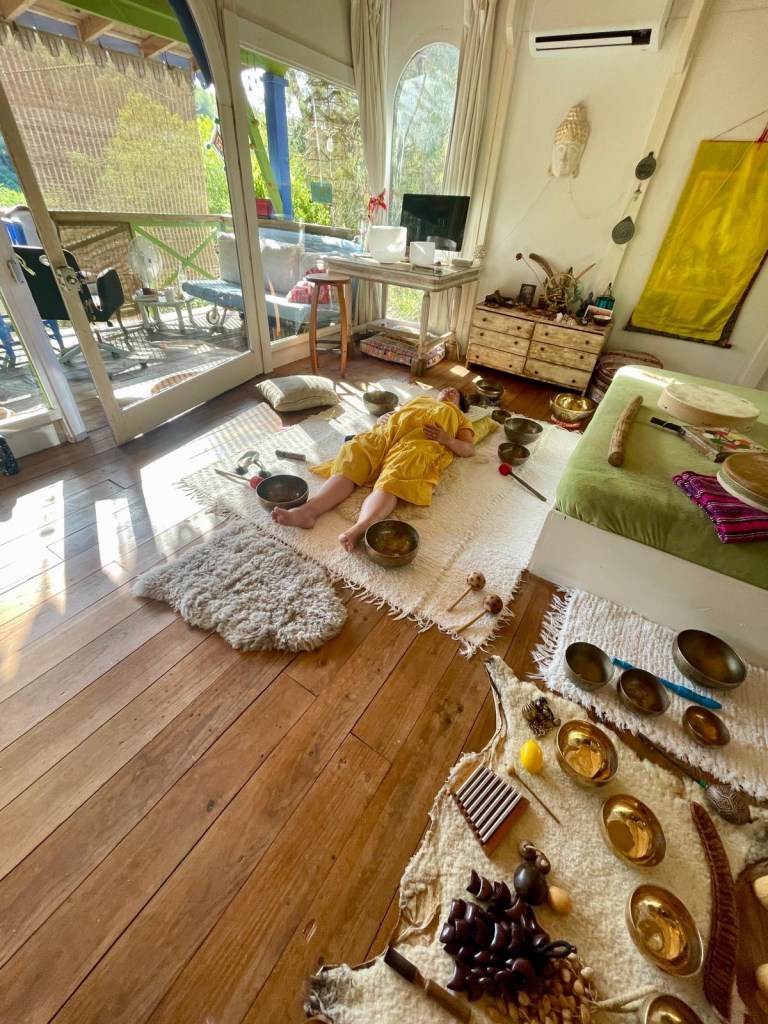
By the end of the year Macmillan ran a campaign on how the charity made time for people to live their best lives. Never a truer word said. My story went out in a Gifts in Wills campaign in conjunction with BBC Music Magazine and was about singing through adversity. I’m told that phase one of the campaign has reached 5.2 million people so far. I’m hoping they put the campaign on buses so I can make a joke about looking like the back of a bus.
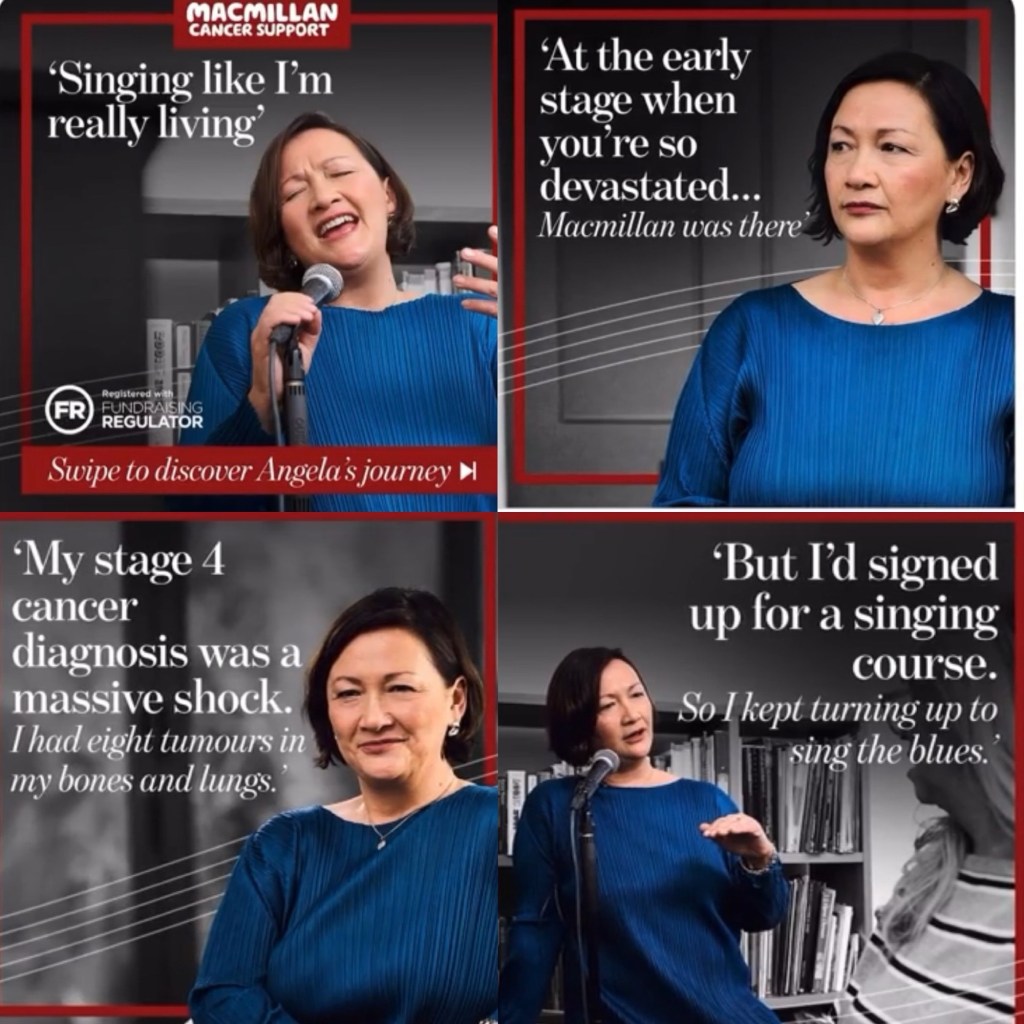
There are no pictures that can describe what happened next. On July 20th last year, I got the news from my first three-month PET scan that all my tumours were ‘quiescent’. A beautiful word. Which really means gone. With stage 4 metastatic cancer it is of course never really gone but I had had…
A complete metabolic response.
Nothing in the lungs. The sites where the cancer had been in my bones were still visible, healing, but there was no evidence of disease. In just ten weeks of treatment. It was unusual but not unheard of. For a moment, I wondered— had I sung and painted it away? Perhaps I really was a magical unicorn. But I’m also a realist. I got lucky. My cancer is oestrogen sensitive. They cut off my oestrogen. The treatment worked. The science worked. If I am very lucky, it will continue to work. But nothing is certain.
But hard as it is with every scan – I try to remember to let positivity reign. And I am mindful that for many people with cancer, and the many friends I have made and lost with cancer –positive thinking is not always enough to save you. It sometimes feels like we are on a battlefield with many comrades in arms, brave warriors, falling around us.
But I didn’t go through this alone.
As I wondered how to tell the world about my miracle, I realised that the real magic was the care and support around me. The Macmillan badged nurses who remember my individual circumstances when I turn up for another blood test, every kind and patient voice at the other end of Macmillan’s support line. The people who listened and who made sure I was heard. Who helped me navigate the system in an NHS that can be brilliant—
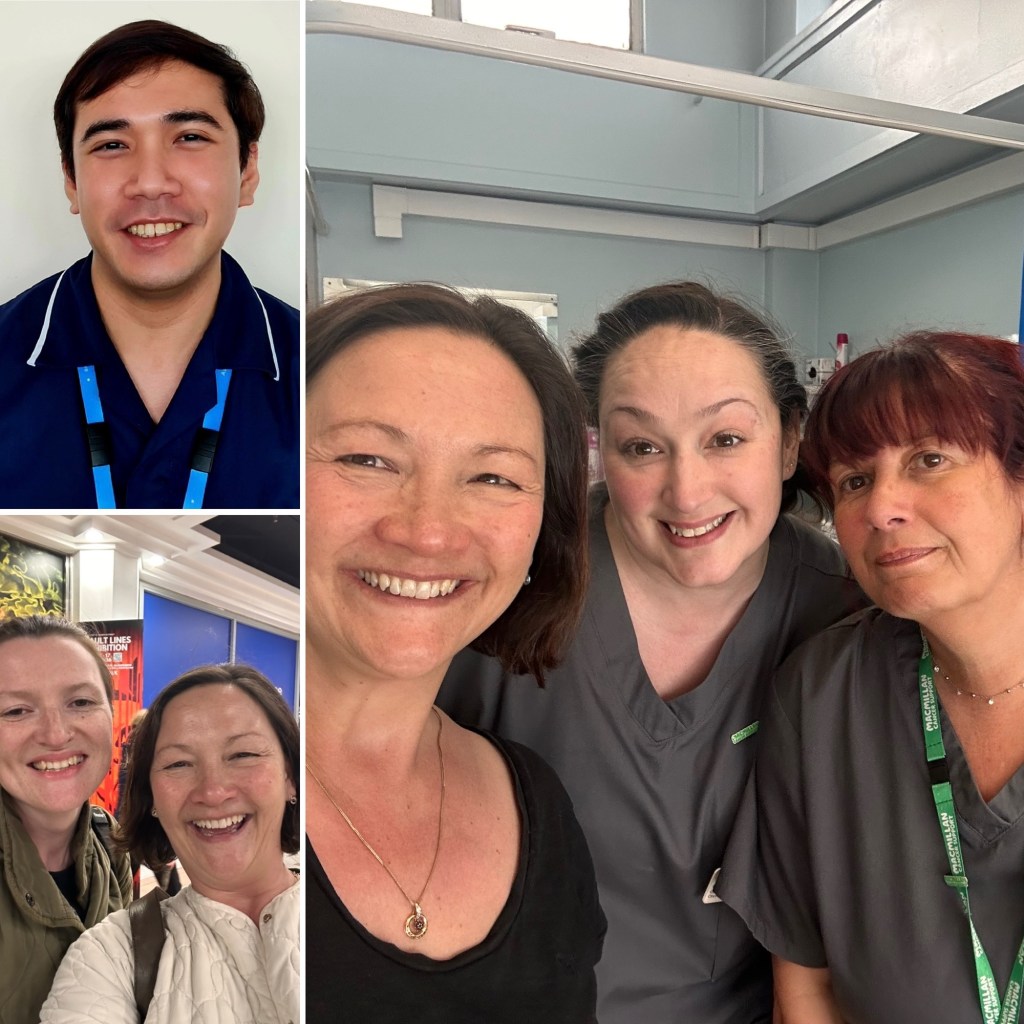
but also confusing, overwhelming, and, at times, deeply flawed because of struggling infrastructure, systems and funding. My story would have been very different without these caring people. Here are just some of the Macmillan trained nurses who make it a joy to walk into oncology unit each month. And that’s Mark on the left.
Real people.
Real empathy.
Making a real difference—
in the hardest moments of people’s lives.
So, for now, I’ll keep crossing my fingers…and being very careful crossing the road. Painting and singing and sounding my way back to health. I still need support navigating the twists and turns of this disease— and that’s why organisations like Macmillan matter so much.
They haven’t just helped me survive cancer.
They’ve helped me live with it. To live through it.
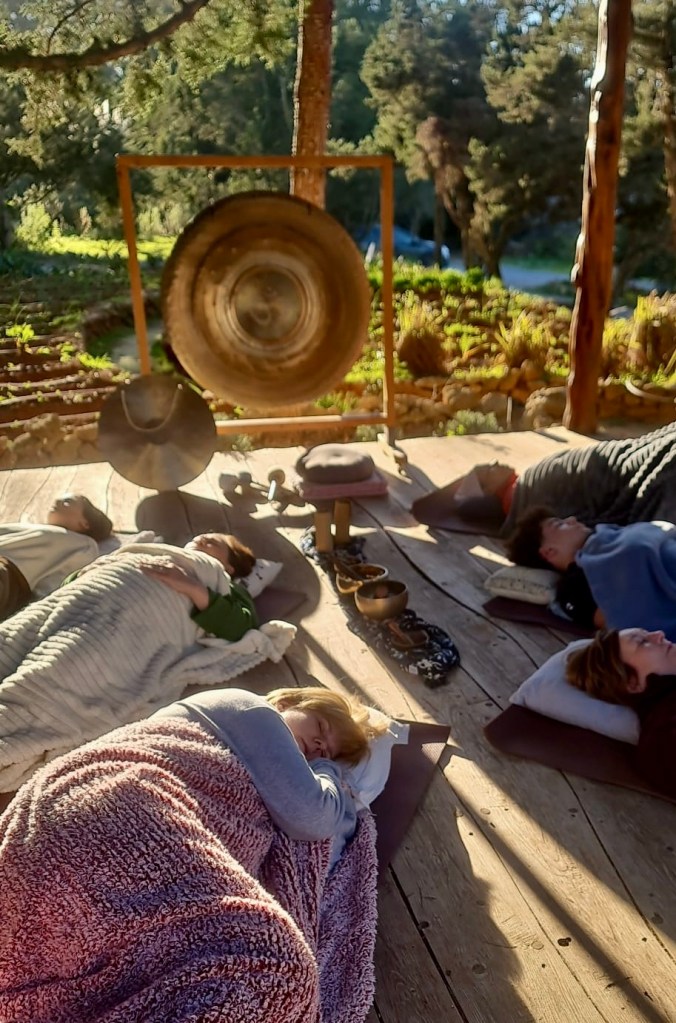
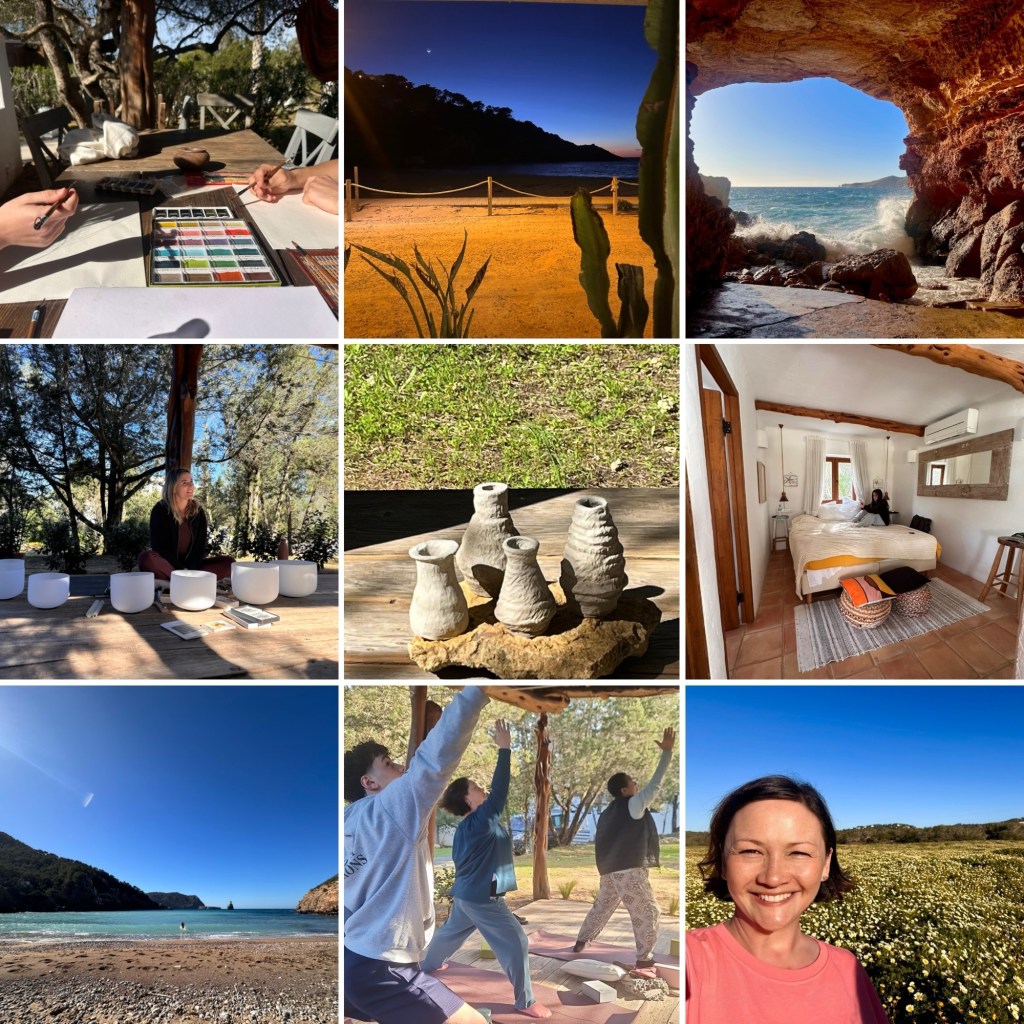
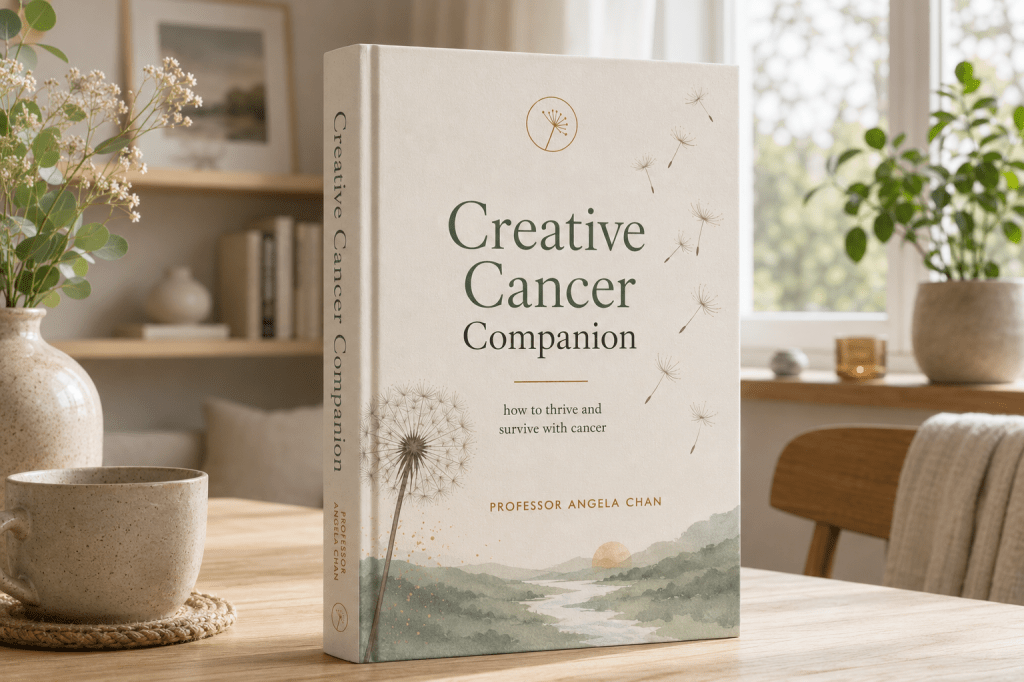
And now, I try to pass that on. I run creative retreats for people living with cancer in the UK and Ibiza (because why not!), My blog is slowly becoming a book—The Creative Cancer Companion. If anyone works in publishing and can help please see me at lunch!
For the many of us living longer with cancer now – due to amazing research – we learn to manage it like chronic illness.
We learn to walk more comfortably with the shadow of death following us and dance with the light where we can.
Because if there’s one thing this experience has taught me, it’s that even in the darkest moments- there is still creativity, there is still connection, and there is always hope.
Thank you for listening.


Leave a comment